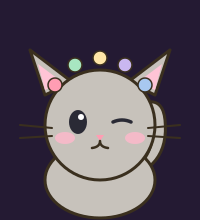
5000 generative cats, 0.002 ZEC each. Paid straight to a Zcash address through a shielded memo, tracked by an open indexer instead of a smart contract. Tokens #1–100 are reserved for an airdrop — public mint starts at #101, not open on this page yet.
Zcash has no smart contracts, so ZEROCAT isn't a token standard — it's a fixed set of rules an open indexer script enforces by watching the chain. Read that as "nobody's changing it without redeploying the indexer," not "the protocol itself forbids it."
The page asks your wallet for your address, then requests a shielded payment with that address as the memo — both happen inside the Noir Wallet popup. Not open yet on this page.
Every 5 minutes, a watch-only wallet (holding only a viewing key — it can never spend) decrypts confirmed payments and hands out the next sequential token ID(s).
Once totalMinted hits 5000 the indexer stops granting new IDs.
One payment can claim up to 20 sequential IDs. A wallet can still send multiple transactions.
Token IDs #1–100 are hard-reserved in the indexer for a future airdrop, not sold through the mint flow — a deliberate exception to a pure fair-mint, called out here rather than left unstated. Public, paid mints get sequential IDs starting at #101, and the 5000 supply cap still applies on top of the reserve.
Only shielded payments with a destination address in the memo get credited automatically — the MINT button (once open) does this for you using the address your wallet reports back. Transparent payments can't be attributed to anyone — Zcash's light-wallet tooling can't see who funded a transparent output.